
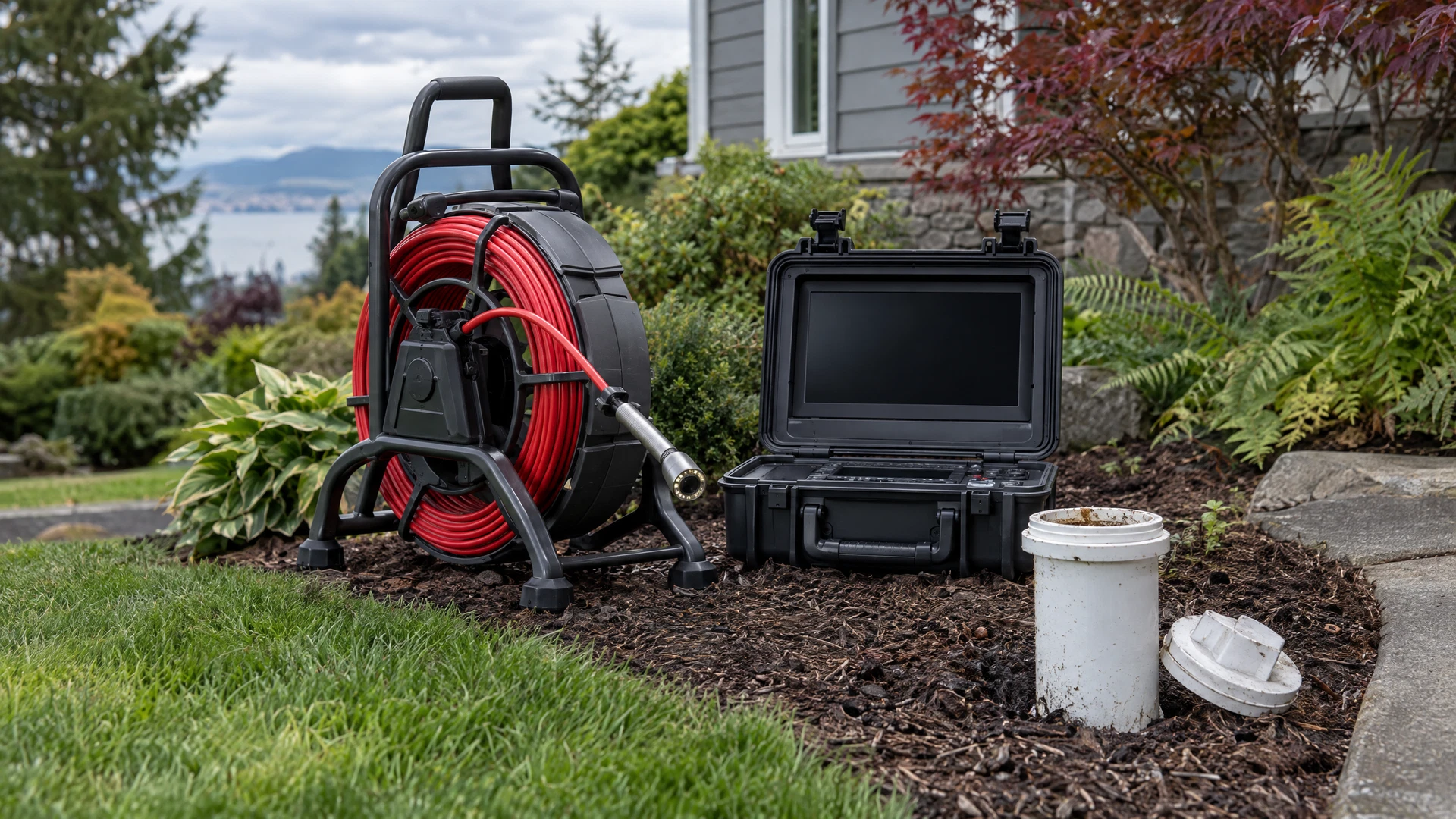
A sewer line is underground, so a walk-through may not reveal concerns. I use a video camera to view the accessible interior of the lateral line and document visible conditions such as roots, blockage, standing water or damage. A scope can give you useful information about a part of the property that is difficult to assess from above ground. I explain what I could see, where access limited the view, and when a plumbing professional may need to take a closer look. My background includes construction, and I hold Washington inspector license #966, the InterNACHI Certified Professional Inspector credential, and an IAC2 credential.
What I check with the camera
I guide a camera through an accessible entry point, commonly a cleanout, to view the building’s lateral sewer line. The camera may reveal pipe material and visible cracks, roots, offsets, restrictions, standing water, or a crushed, separated or deteriorated section. This is a visual inspection, not repair work, and it cannot promise how the line will perform in the future.
I can report only the portions the camera can reach and see. Bends, obstructions, water or an inaccessible cleanout can limit the view. A scope does not reveal concealed pipe walls or establish the full cause, extent or repair cost of a concern. I review material observations with you; a plumber can assess repair options if further diagnosis is appropriate.
How to prepare access before inspection day
When you schedule, tell me if you know where the cleanout is, whether it is obstructed, and whether the property uses a septic system. If you are buying, ask about access and share any known backups, slow drainage or prior sewer work. That context helps me plan, but it does not replace what I observe through the camera.
Please make the known access point reachable. Do not uncover anything unsafe; let me know if you cannot find the cleanout. I do not promise to remove a toilet, move heavy belongings, climb to an unsafe roof vent or enter unsafe areas. If access is unavailable or I cannot proceed safely, I explain the limitation rather than imply that I inspected the entire line.
How I help you use the findings
My scope records conditions visible on inspection day. It cannot predict a future blockage or reveal every hidden defect, and a clear view does not promise that the line will never need attention. If I observe a concern, ask me to show you the finding and clarify which portion was visible. You can then seek a plumber’s evaluation or estimate before making a decision.
I work exclusively for the customer and do not repair homes I inspect. A sewer scope is not plumbing repair work or a substitute for a plumber’s diagnosis. I can explain what the camera showed and its limits; I do not determine the full cause, repair plan or cost.
Where I schedule sewer scope inspections
I serve Kitsap and Pierce Counties and nearby Olympic Peninsula and Puget Sound communities. Ask me whether your property is within reach. A typical home inspection takes two to three hours depending on the property; access affects what I can view during a sewer scope.
Request an appointment through my online scheduling page, or call (360) 620-8946 or email [email protected]. You are welcome to attend and ask questions. I review the findings with you, explain any access limits, and discuss whether a plumbing specialist should take a closer look.
Questions before you book
Does the camera inspect every drain and pipe in the house?
No. I view an accessible portion of the lateral, not every fixture drain or concealed pipe. I will explain the access and camera-visibility limits for the scope.
What if the camera finds a blockage or damage?
I review the visible finding with you and clarify what portion I could see. A plumber can diagnose the condition and estimate repairs; I do not repair homes I inspect.
Should I arrange a scope when buying a home?
Consider a scope when the buried lateral is unknown or drainage is a concern. Arrange access and discuss timing with me so I can plan the inspection.
Would you like me to include the sewer line in your due diligence? Schedule through my online scheduler or call (360) 620-8946. Tell me about access and drainage history so I can plan and explain the inspection’s limits.
Schedule your inspection