
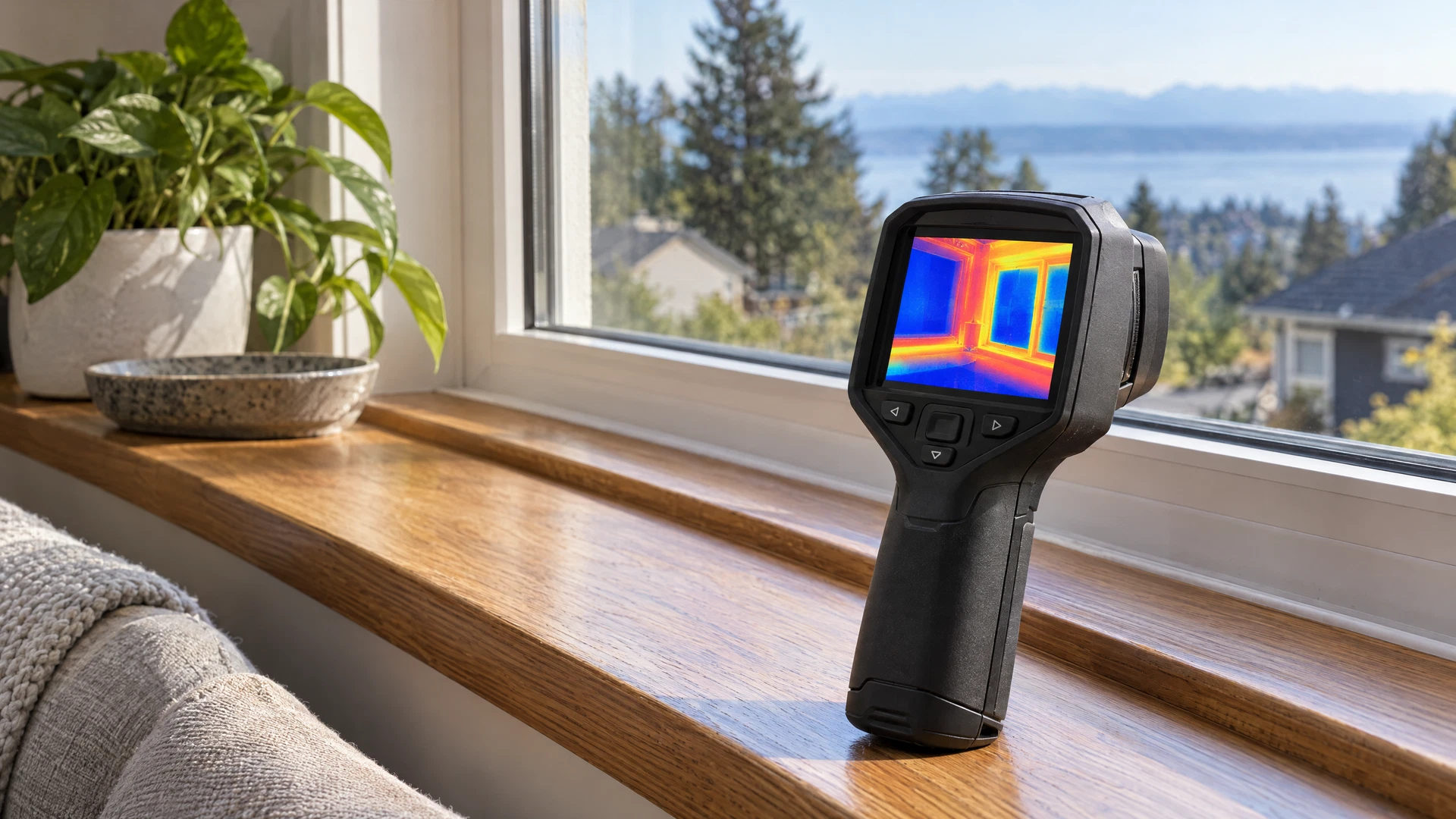
I use a thermal camera to record differences in surface temperature and display them as an image. During a home inspection, those patterns can point me toward areas worth a closer look, including possible moisture-related conditions, insulation gaps, or unusual heat around a system. They are clues, not a view through walls or a diagnosis. I interpret thermal observations alongside visible conditions and other inspection information, explain what a pattern does and does not establish, and note when a specialist or additional testing may be appropriate. My goal is to give you useful context without claiming more than the image can show.
What I can look for with thermal imaging
Surfaces at different temperatures can create patterns that are difficult to notice in ordinary light. In suitable conditions, an infrared image may help me spot an area of missing or uneven insulation, air movement, a possible moisture pattern, or unusual temperature at heating or electrical equipment. I use those observations to decide where a closer visual check or another appropriate inspection method may help. What I can observe depends on the conditions at the property during the visit.
An image does not prove the cause of a pattern. A cool or warm patch can have more than one explanation, and the camera measures surface temperatures—not moisture content, wiring condition, or indoor air quality. I explain the location and visible pattern, consider relevant inspection findings, and recommend further evaluation when the available evidence leaves an important question unanswered. A thermal image is one part of an inspection, not a substitute for sound judgment or any specialist assessment the concern may require.
Limits and conditions that affect a scan
Thermal imaging does not see through drywall, floors, or other solid materials. It detects temperature differences at the surface; a condition inside a wall may affect the image only when it creates a detectable surface pattern. Glass and reflective finishes can show reflected heat rather than the temperature of what is behind them. Furniture, coverings, recent weather, sunlight, and whether heating or cooling has been operating can all affect which patterns are visible.
I treat a thermal scan as a non-invasive inspection aid, not a guarantee that hidden defects will be found. It does not identify mold species, determine whether a home is safe for a person’s health, confirm an electrical system is safe, or replace opening materials or specialist testing. If I notice a pattern that warrants more investigation, I describe the concern and a next step to consider rather than presenting the image as a final diagnosis. A scan may provide helpful information, but it cannot settle every question about a concealed condition.
How to prepare for my visit
Please make the areas you want me to inspect reasonably accessible. If you have noticed a recurring cold spot, a past leak, condensation, an odor, or a room that is hard to heat or cool, point it out and share when it occurs, if known. That context can help me focus my observations. You do not need to remove wall coverings or open electrical equipment, and I do not ask customers to take on unsafe or invasive preparation.
Thermal patterns depend on conditions at the time of the visit, so a scan may not reveal the same clues in every season or operating condition. Tell me about recent repairs or unusual heating and cooling settings. My typical inspection takes about two to three hours, depending on the property, and you are welcome to attend. I review detailed findings with you so you can ask about the limits and significance of an observation.
How I explain findings and possible next steps
I work for you and do not perform repairs on homes I inspect. If a thermal pattern raises a concern, I can explain what I observed and whether the available information supports monitoring, another inspection method, or evaluation by a qualified specialist. Follow-up could involve a moisture assessment, an HVAC contractor, or an electrical professional, depending on the issue. The thermal image itself does not establish which trade is responsible or authorize repair work.
I serve homeowners and buyers across Kitsap and Pierce Counties, the Olympic Peninsula, and Puget Sound communities. If you are arranging a home inspection, ask me whether thermal imaging fits your property and concerns and how I will scope it. You can schedule through the existing scheduling page, or call (360) 620-8946 or email [email protected] with questions before booking. I can discuss what this service may help clarify and where its limits matter.
Questions before you book
Can a thermal camera see a leak or mold inside a wall?
I cannot see through the wall or identify mold. A temperature pattern may suggest an area that deserves closer attention, but it does not prove moisture is present or explain its source. Further evaluation or testing may be needed to answer those questions, and I will describe what I observed without treating the image as a diagnosis.
Does every thermal scan find hidden problems?
No. Results depend on temperature differences, access, surface materials, weather, and system operation. A lack of a visible pattern does not rule out a concealed problem, and an unusual pattern is not automatically a defect. I explain the conditions and limits relevant to the observation.
Should I book thermal imaging separately from a home inspection?
Tell me what you want evaluated when you schedule. I can discuss how thermal imaging fits the inspection and your concerns, including the scope and any limits for the property. Use my scheduling page, call me at (360) 620-8946, or email me at [email protected].
Have a particular room, surface, or temperature concern in mind? Share what you have noticed when scheduling. I can discuss whether thermal imaging is appropriate, what it may reasonably tell you, and when another kind of evaluation may be needed.
Schedule your inspection